
Art & Craft Heritage3 min read
Why Do We Create Beauty Knowing It Will Disappear?
Why do we create things that are never meant to last? From Kolams to Ganesh idols, Indian craft reveals a deeper philosophy of impermanence, presence, ritual and the timeless human need to create.
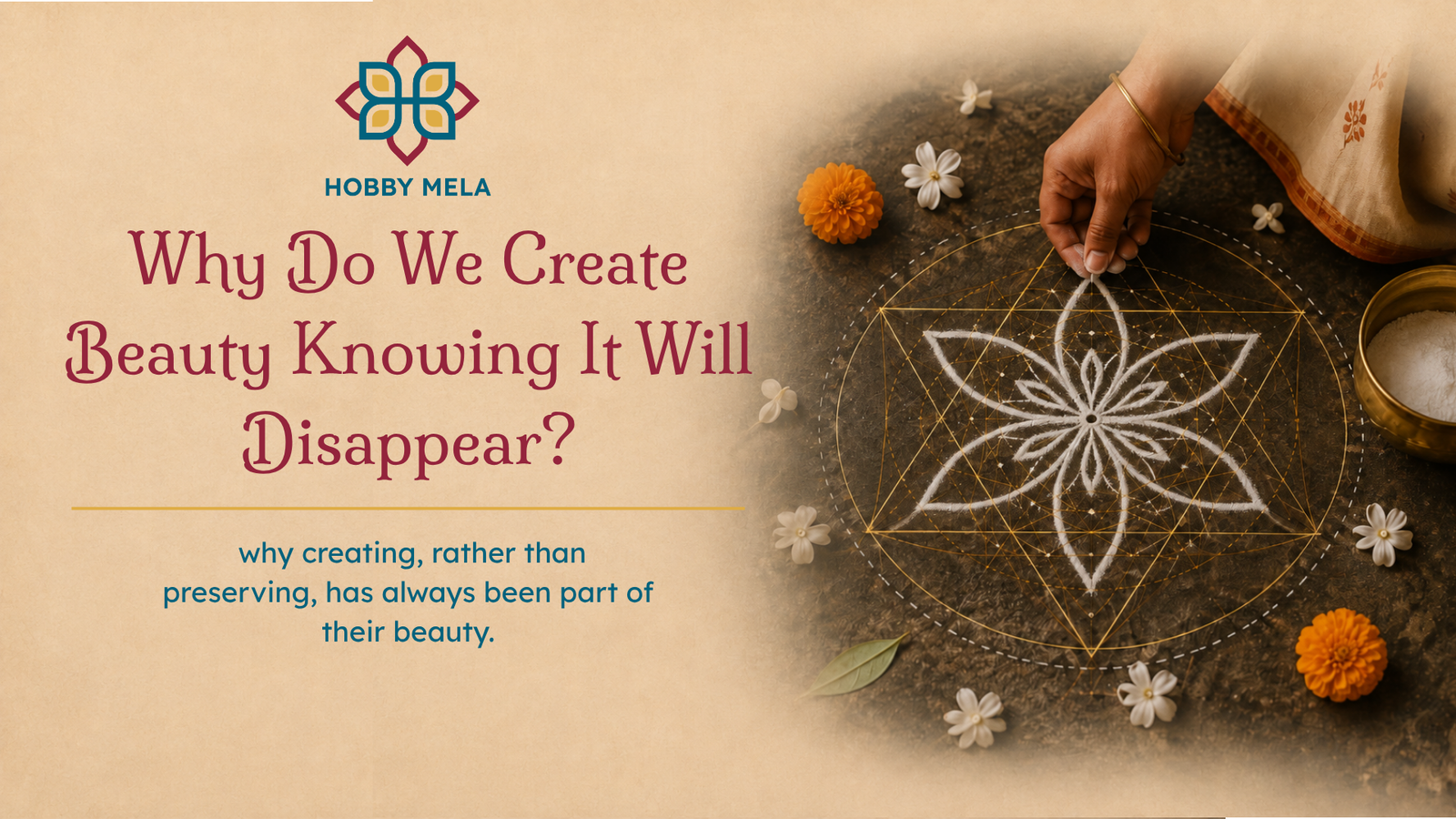
Every morning, across millions of Indian homes, someone bends down to draw a Kolam. By evening, it may have disappeared swept away by footsteps, washed away by rain. Tomorrow, they will draw it again.
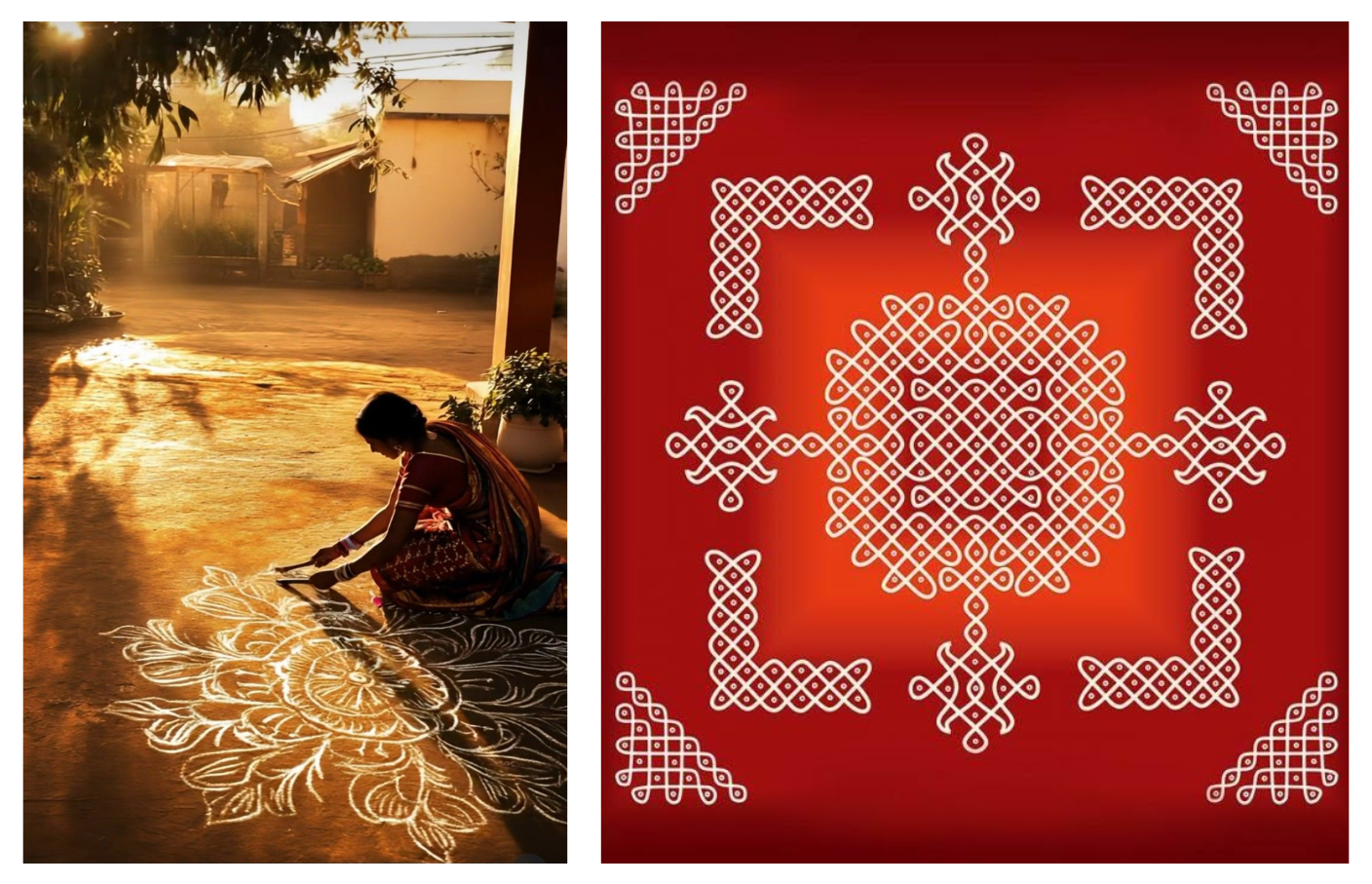
To many, this seems puzzling. Why spend hours creating something that was never meant to last? Perhaps because, in India, creation was never just about the object. It was always about the person creating it.
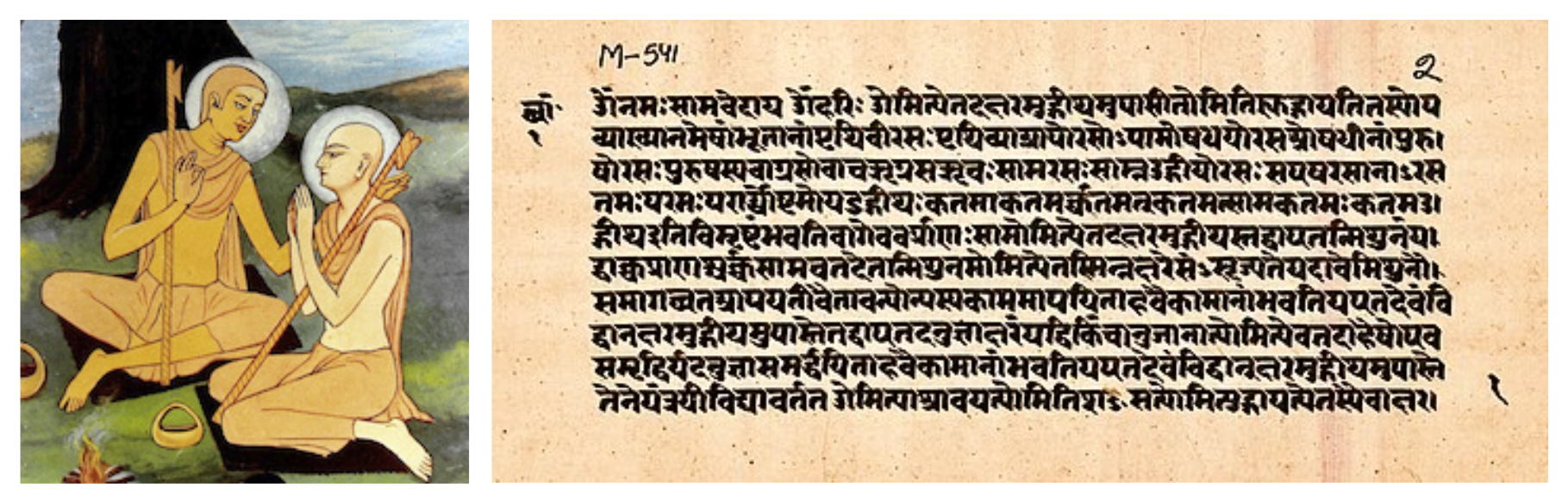
One of the most profound teachings of the Chandogya Upanishad is the phrase “Tat Tvam Asi”- “Thou Art That.” It suggests that the same universal consciousness that created the cosmos also exists within each of us. For centuries, Indian philosophy has viewed creativity not simply as a human skill, but as an expression of the divine that already lives within us.
In that sense, a potter shaping clay, a woman drawing a Kolam before sunrise, an artisan weaving silk, or a sculptor carving stone are all participating in the same creative force. Making becomes more than craftsmanship. It becomes a quiet act of remembering.
Perhaps this is why creating art has always felt strangely transformative. As the hands begin to move, the mind slowly falls silent. Time disappears. Thoughts dissolve. Only the act of making remains.
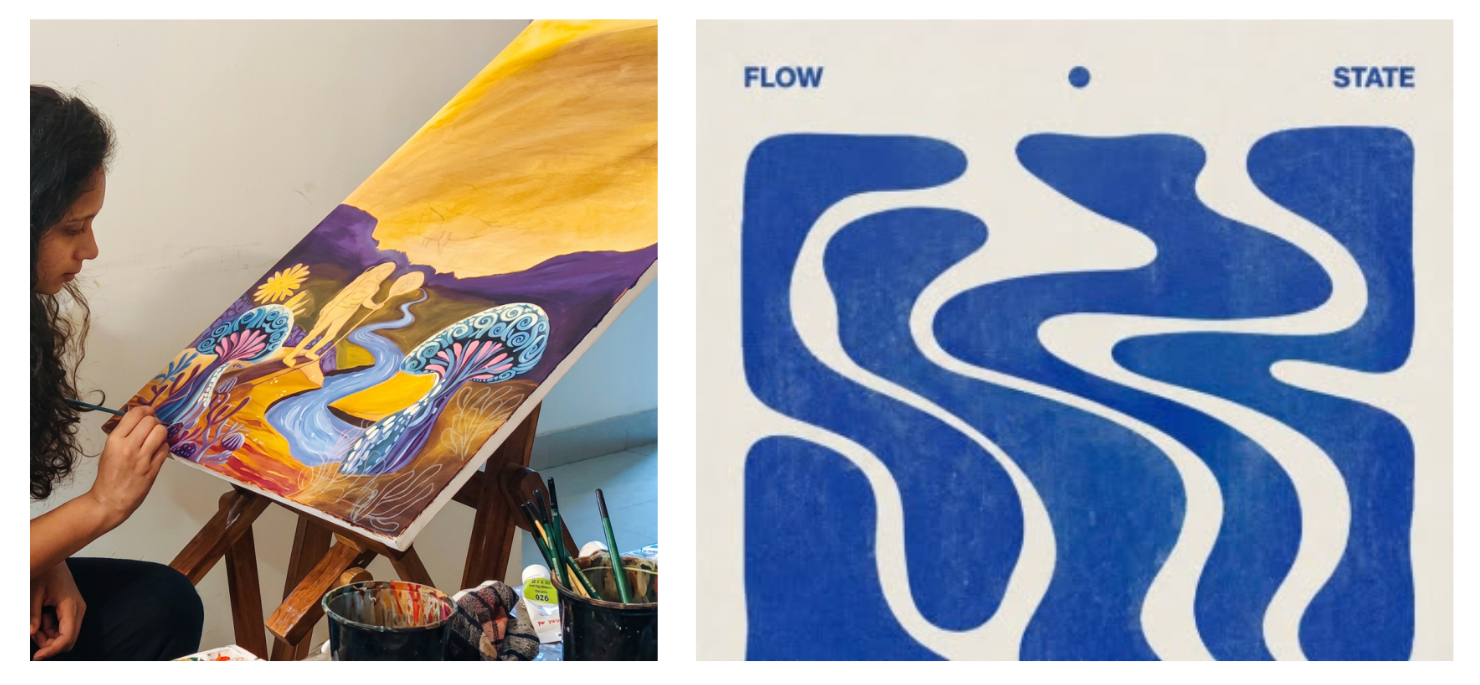
Modern psychology calls this Flow State, a state where complete focus brings calm, clarity and deep fulfilment. Ancient Indian philosophy described something remarkably similar thousands of years ago: a moment where the ego softens, awareness deepens, and the individual feels connected to something larger than themselves. Different languages. The same human experience.
This philosophy quietly shaped everyday life across India. Anthropologist Victor Turner argued that rituals are not simply traditions, they transform ordinary actions into meaningful experiences. Perhaps that’s why India’s greatest rituals are rarely grand spectacles. They begin at the doorstep.
A Rangoli welcoming a guest. A brass lamp lit at dusk. A garland woven by hand. A banana leaf laid before a meal.
Here, craft doesn’t decorate ritual. Craft is the ritual. It transforms the ordinary into the sacred.
Perhaps nowhere is this more beautifully expressed than during Ganesh Chaturthi. For centuries, idols were traditionally sculpted from local river clay, worshipped for a few days, and then immersed back into the very waters from which they came. The object wasn’t meant to survive. The act of creating, celebrating, and letting go was.
Impermanence wasn’t a flaw. It was the philosophy.
Even India’s floor art carries hidden layers of knowledge. Researchers studying South India’s Kolams discovered that these intricate patterns are built on sophisticated principles of symmetry, geometry and algorithmic thinking. For generations, women have practised complex mathematical reasoning every morning, not in classrooms, but on the thresholds of their homes.
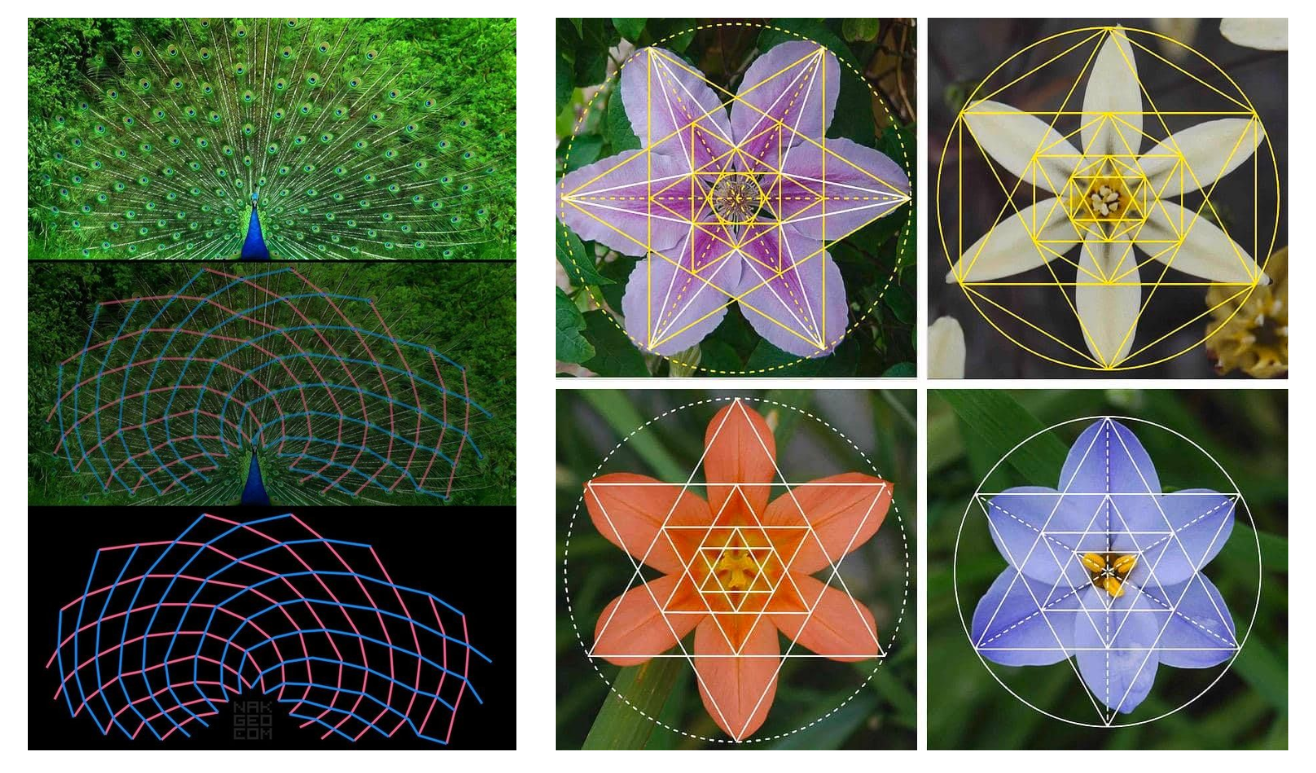
Science. Art. Mathematics. Spirituality. All meeting in a handful of rice flour.
Perhaps this is what makes Indian craft unlike anywhere else in the world. In many cultures, art is created to be preserved. In India, some of the most beautiful art is created to be offered.
To welcome. To celebrate. To pray. To nourish. To let go.
Its value is not measured by how long it lasts, but by the state of mind in which it was made.
Maybe that’s the quiet lesson Indian craft has been teaching us for thousands of years. Every act of making is an opportunity to step outside ourselves. To become fully present. To surrender to the moment. To transform the ordinary into something sacred.
And perhaps that is why, after all these centuries, India’s greatest gallery has never been inside a museum. It has always been in its homes, its festivals, its kitchens, its courtyards, and in the countless hands that continue to create, not because the work will last forever, but because, for a brief moment, the act of creating allows something timeless to flow through them.
Follow HobbyMela on Instagram and Linkedin
Subscribe on https://www.youtube.com/@hobbymela
Read more at hobbymela.com