
5 min read
The Psychiatrist Who Asked His Patients to Draw
Can drawing reveal emotions that words cannot? From Carl Jung's observations to modern neuroscience and art therapy, discover why creating art helps us process emotions, unlock hidden memories, and understand ourselves in ways that words alone often cannot.
In the early 1900s, Swiss psychiatrist Carl Jung noticed something unusual in his practice. His patients would spend hours talking about their lives. They spoke about relationships, childhood memories, fears, dreams, and the countless experiences that shaped who they were. Yet every so often, Jung would ask them to do something unexpected. Instead of continuing to speak, he would ask them to draw.
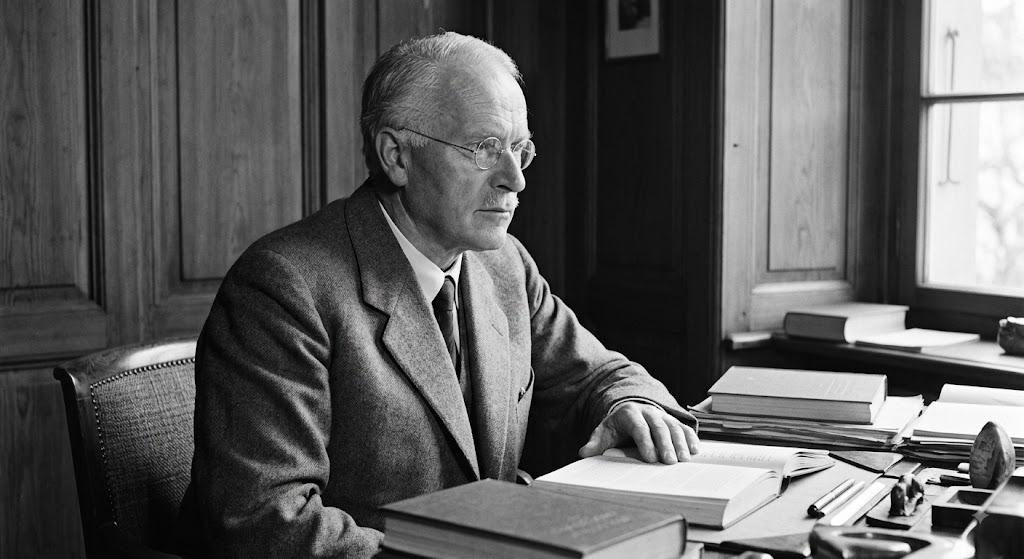
Something remarkable began to happen. The drawings often revealed truths that words had failed to uncover. Symbols appeared before explanations. Emotions surfaced before conscious insights. Recurring patterns emerged that neither Jung nor his patients had recognised during hours of conversation. The more he witnessed this phenomenon, the more convinced he became of a radical idea: the human mind does not think only in words. Sometimes, it thinks in images. More than a century later, neuroscience is beginning to explain why.
The evidence becomes even more compelling when we observe young children. Long before they can explain disappointment, grief, jealousy, or anxiety, they often know how to draw those emotions. A page filled with dark scribbles can become a thunderstorm of frustration. A giant monster may represent a fear they cannot yet name. A family drawn standing far apart may quietly reveal feelings of loneliness or disconnection. Developmental psychologists have long observed that visual expression emerges years before sophisticated emotional language. This raises an intriguing possibility. Perhaps images are not simply illustrations of our thoughts. Perhaps they are one of the ways we think.
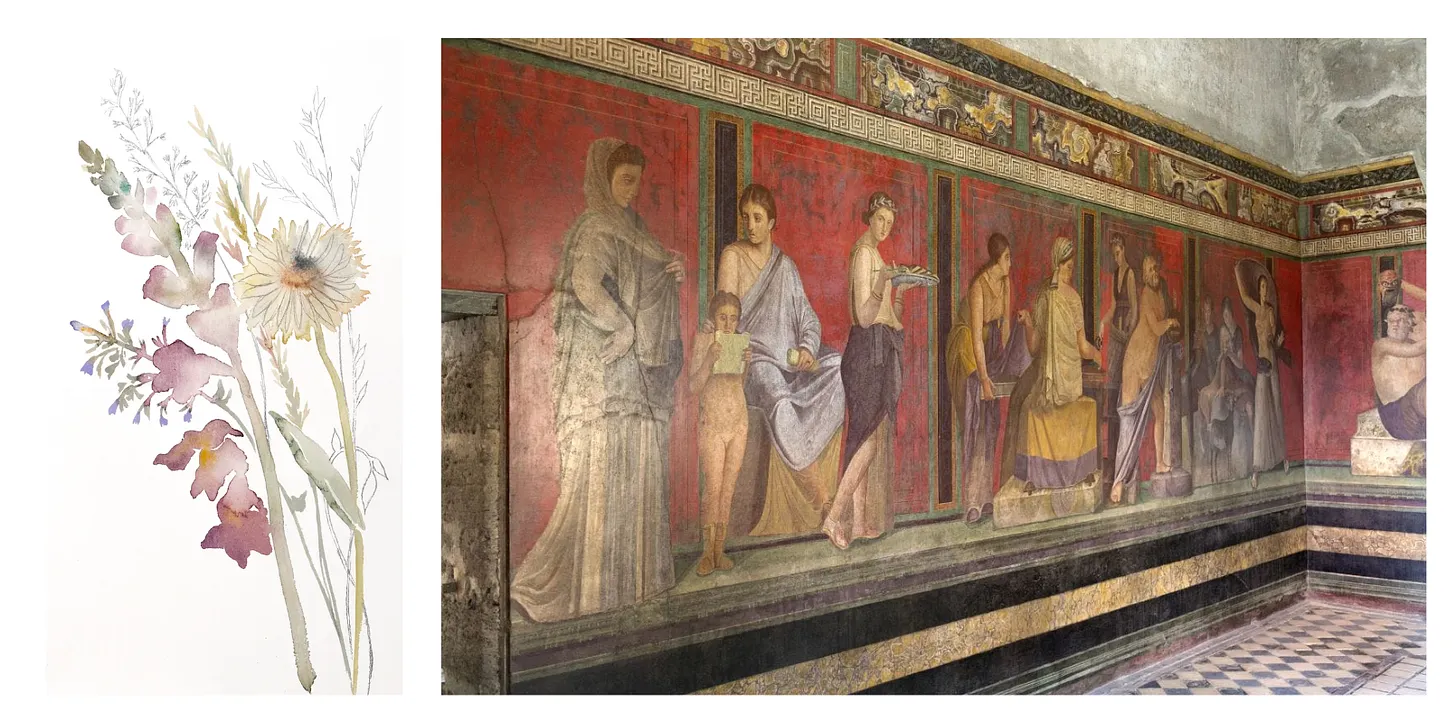
This idea becomes even more fascinating when we examine how the brain stores difficult experiences. Trauma researcher Dr. Bessel van der Kolk, author of The Body Keeps the Score, spent decades studying how people remember emotionally overwhelming events. His research revealed that not all memories are stored as neat narratives with a beginning, middle, and end. Some memories are stored instead as sensations, images, fragments, and emotions. This helps explain why people so often say, "I don't know how to put it into words." The experience may not exist in the brain as language at all. It may exist as a feeling, an image, or a memory that words have not yet learned to describe. Suddenly, Jung's observations begin to make sense. If some experiences are stored visually or emotionally, then perhaps creating images offers another pathway back to them.
Modern neuroscience has uncovered another piece of this puzzle. When we speak, the brain primarily activates language networks. But when we create, whether through drawing, painting, sculpting, weaving, or other forms of artistic expression, multiple systems begin working together simultaneously. Movement, attention, memory, sensory processing, emotion, and imagination all become engaged. Researchers studying creativity have found that artistic activity encourages communication between brain networks that do not always interact during everyday thinking. In simple terms, creating art is one of the few activities that invites large regions of the brain to collaborate at once. Perhaps that is why making something with our hands often feels fundamentally different from simply talking about an experience.

In 2016, researchers at Drexel University decided to investigate this phenomenon through a surprisingly simple experiment. They invited ordinary people into a room and asked them to spend forty-five minutes making art. These were not professional artists. Many of the participants insisted they were not creative at all. Before and after the session, researchers measured cortisol, the hormone most closely associated with stress. The results were striking. Nearly seventy-five percent of participants showed a measurable reduction in cortisol levels after creating art. The most surprising discovery was that artistic ability made very little difference. The brain did not seem particularly concerned with whether the artwork was beautiful or technically accomplished. It seemed to respond simply to the act of creating.
This distinction is more important than it first appears. Much of modern life has trained us to judge creativity by its outcome. We ask whether the painting is beautiful, whether the pottery is good enough, or whether the drawing looks professional. Yet many of the pioneers of art therapy, including Margaret Naumburg, argued that the real value of art lies somewhere entirely different. Its greatest gift is not the object that eventually hangs on a wall. It is what the maker discovers during the process of creating it. The artwork is often only the visible trace of an invisible journey. The process, not the product, is where transformation begins.
Anthropologist Ellen Dissanayake spent much of her career asking a question that few people stop to consider: Why do humans create art in the first place? Her conclusion challenged one of our most common assumptions. Art, she argued, is not a luxury reserved for societies that have solved more practical problems. Nor is it simply entertainment or decoration. It is a fundamental human behaviour. Across cultures and throughout history, people have painted, carved, woven, danced, decorated, sculpted, and created not because they had spare time, but because making meaning appears to be one of the defining characteristics of being human.
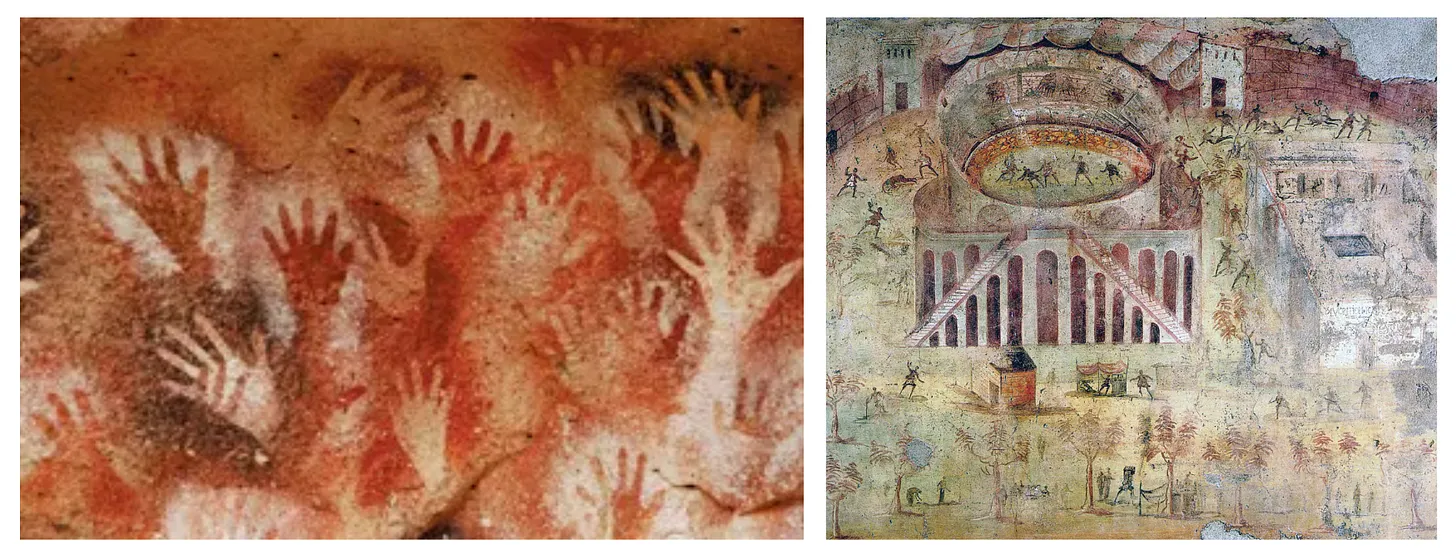
Perhaps this explains why art continues to appear wherever people do. We find it in prehistoric caves, ancient temples, handmade pottery, personal journals, classrooms, places of celebration, and moments of profound grief. We turn to creativity not only when we have something to celebrate, but also when words become inadequate. Carl Jung recognised this more than a hundred years ago. Children demonstrate it instinctively every day. Neuroscientists are beginning to map it. Psychologists continue to study it.
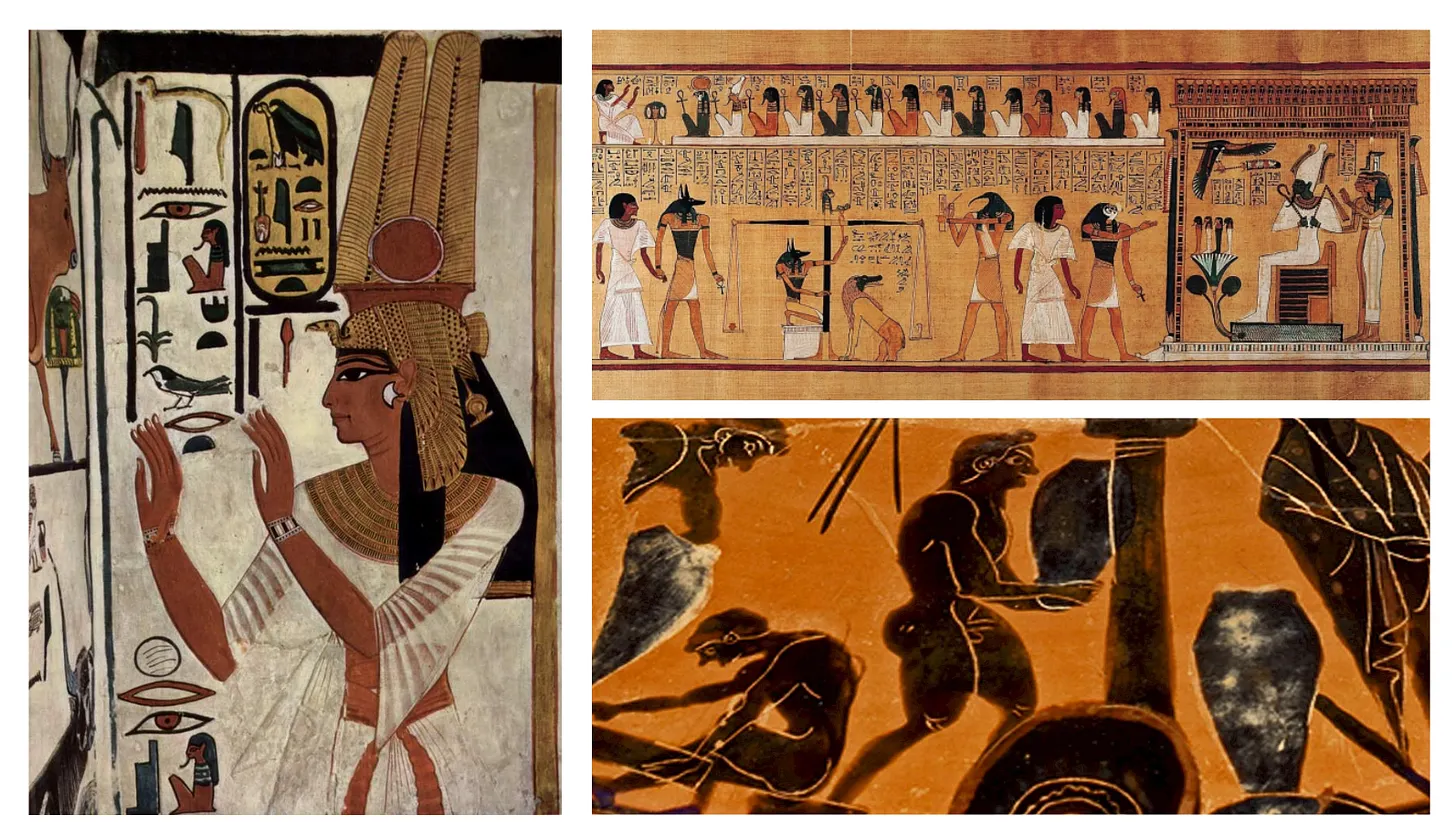
The idea itself is beautifully simple. Language may be humanity's most celebrated tool for understanding ourselves, but it was never the only one. Sometimes the deepest truths cannot be spoken before they are first imagined, shaped, painted, or drawn. Perhaps that is why humans have been making art for tens of thousands of years. Long before we found the words, we had already found the image.
Follow HobbyMela on Instagram and Linkedin
Subscribe on https://www.youtube.com/@hobbymela
Read more at hobbymela.com