
HobbyMela Stories7 min read
Reclaiming the Word “Hobby”
What if the thing you've been calling “just a hobby” has been trying to change your life all along?
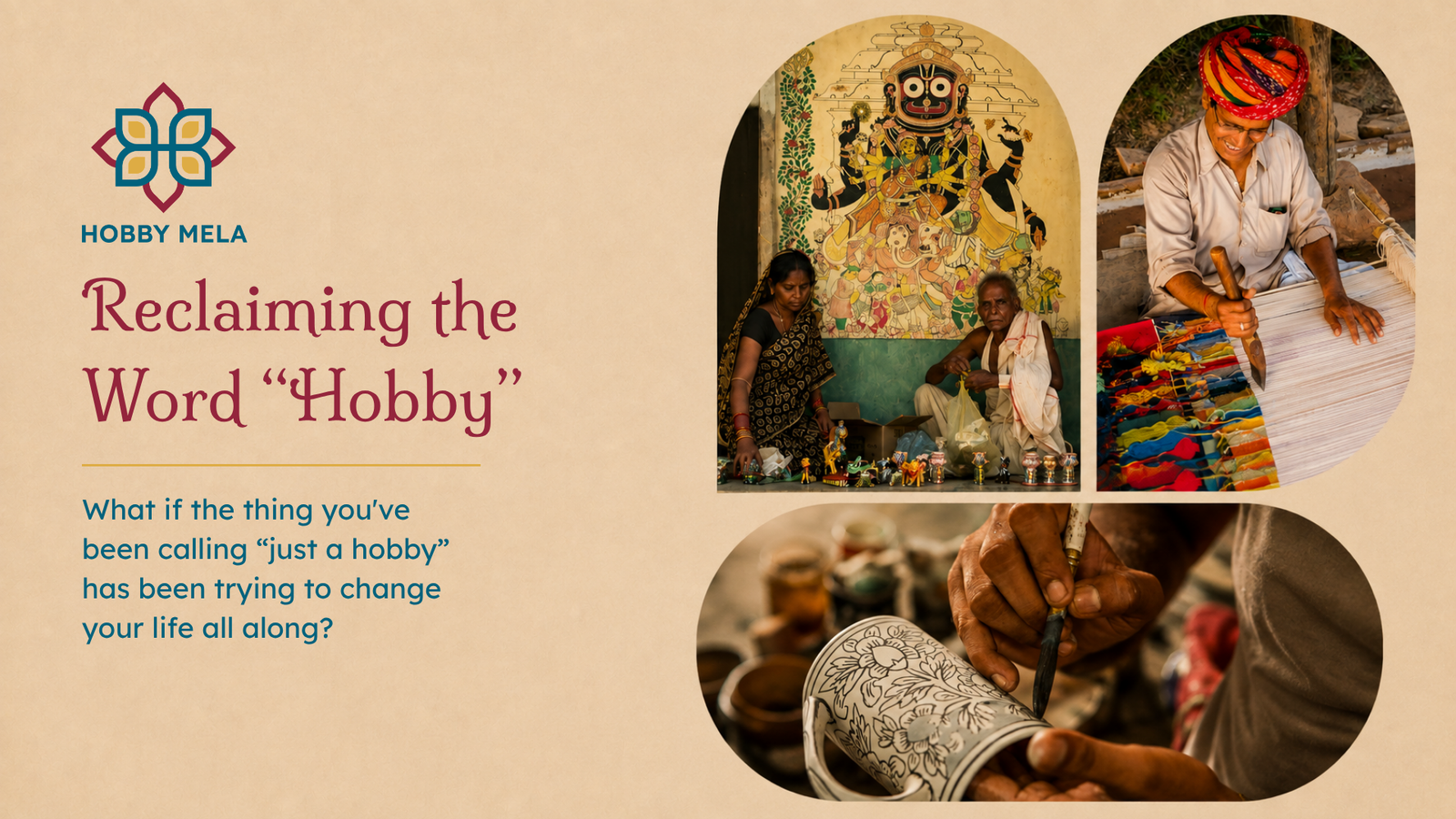
What if the thing you've been calling “just a hobby” has been trying to change your life all along?
There are few words in the English language that sound as innocent and as limiting as the word hobby. It is a word we use almost affectionately. “Oh, it’s just my hobby.” “I only paint on weekends.” “I sing, but only as a hobby.” “I love pottery, but it’s nothing serious.” Somewhere along the way, the word hobby stopped describing what we love and started describing what we don't consider important.
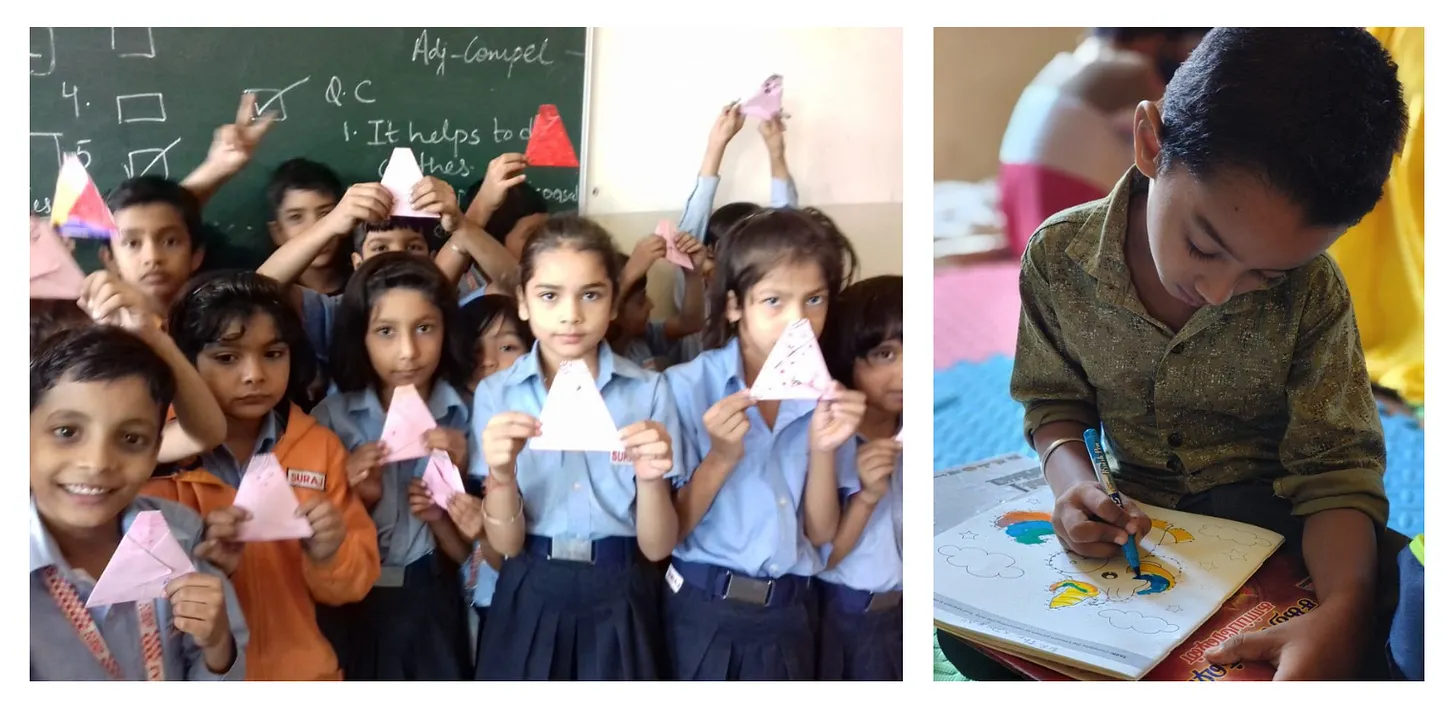
This is especially true in India. For many of us, childhood looked remarkably similar. We drew in the margins of our notebooks, spent afternoons dancing, singing, sketching, building things from paper, or losing ourselves in colours and imagination. We created simply because it brought us joy. Then, almost without noticing, someone asked the question every Indian child eventually hears: “That’s nice… but what are you going to do for a career?”
Slowly, creativity was moved into a separate box, a smaller box labelled Hobby. It became the place for everything we loved but weren't expected to build a life around. The message wasn't always spoken aloud, but we all understood it. Paint if you enjoy it. Dance if it makes you happy. Write if it helps you express yourself. But don't rely on it. Don't dream too much. Don't let it become your future. Because real careers belonged somewhere else engineering, medicine, law, business. Everything else became “just a hobby.”
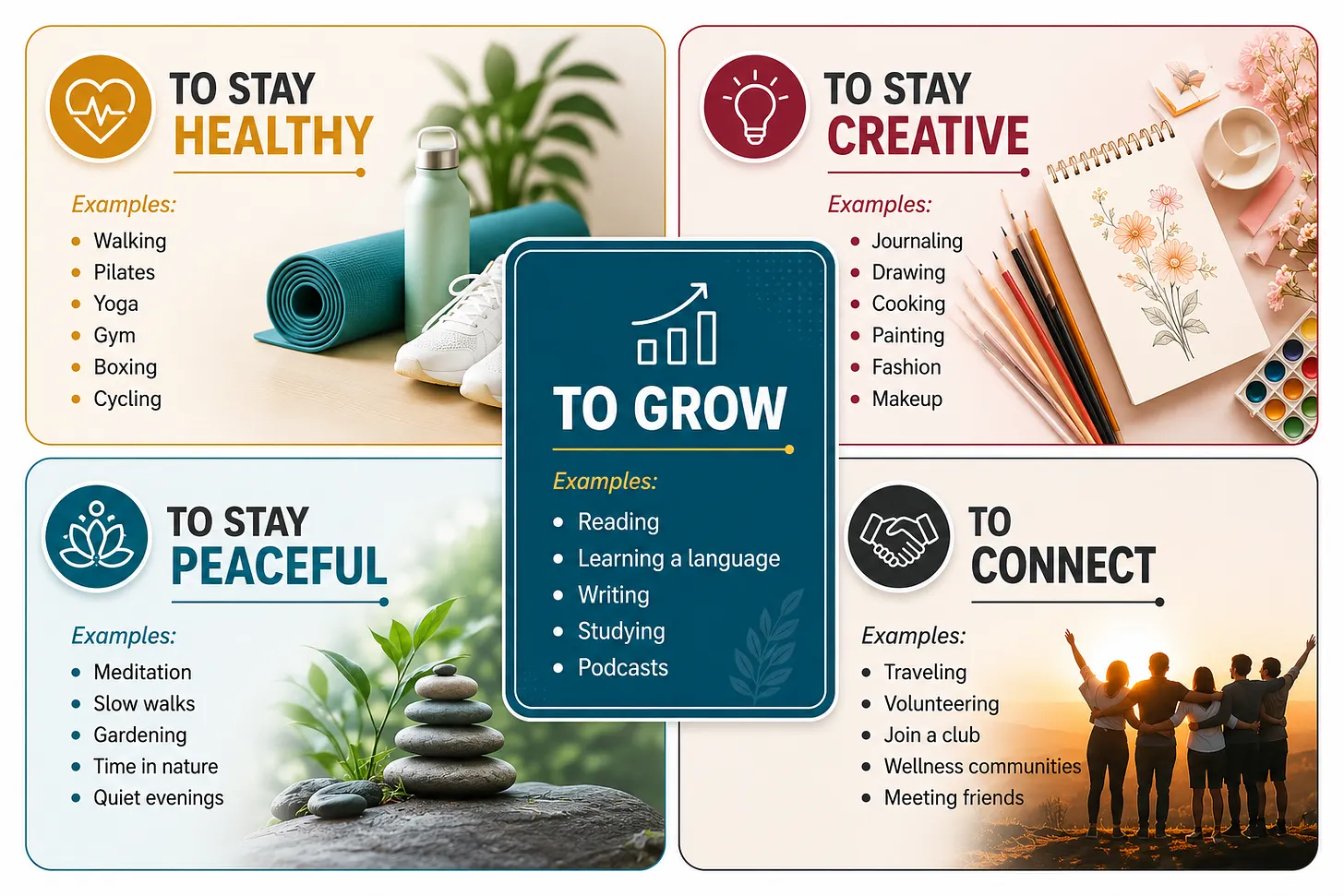
Perhaps that's why so many of us still apologise before talking about the things we love. We say, “I'm not really an artist,” or “I only do this on weekends,” as though we need to reassure people that our passion isn't getting in the way of our ambition. We shrink our own dreams before anyone else has the chance to question them.
Ironically, this is exactly what we encountered when we began meeting artists for HobbyMela. Some artists were initially hesitant when we described the idea of building a platform around hobbies and makers. They wanted to make it clear that they weren't “hobby artists.” They were professionals who had dedicated years of their lives to their craft. And we understood why. For decades, society has treated the word hobby as the opposite of mastery, as though the moment something becomes serious, the hobby has to disappear.
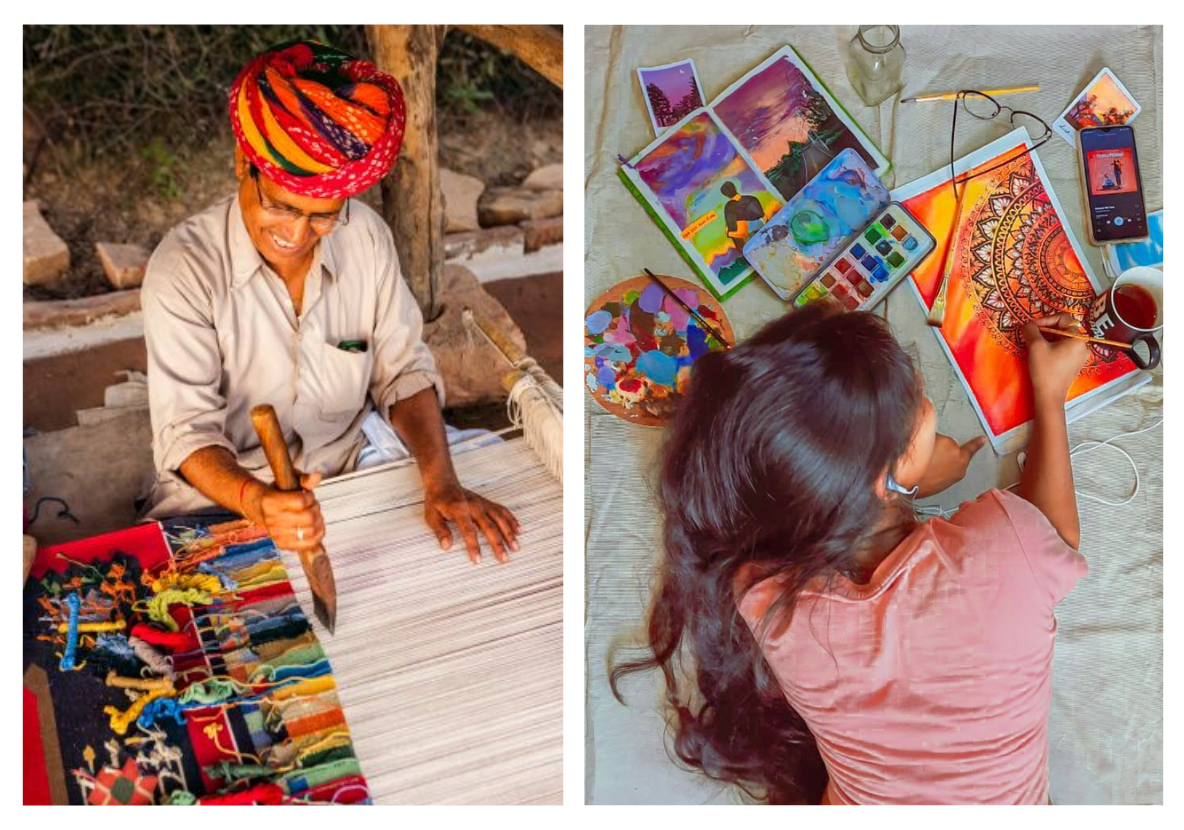
But what if we've understood the word completely backwards?
Every professional artist was once a beginner. Every creative practice begins before there is a business, a studio, a customer, a following, or even a name for what someone is doing. It begins with curiosity. Someone tries something. They enjoy it. They try again. They get better. They fail. They learn. They keep returning to it. Over time, something that began as a hobby can become a skill, then an identity, then a livelihood.
The difference isn't always talent. It is time, persistence, opportunity, and the decision to keep showing up.
We saw this firsthand in the stories of the artists we met while building HobbyMela.
Take Malathy. Her background was in genetics and biotechnology, and her professional life was rooted in academia. After moving to Israel, circumstances made it impossible for her to continue working in her field. Instead of allowing that disruption to define her future, she began exploring her love for creativity and eventually discovered polymer clay. What started as something to explore became a professional creative practice and, eventually, an entire community around a medium that was barely recognised in India when she began. Her story is a powerful reminder that sometimes the thing that begins as a hobby becomes the doorway into a completely unexpected second life.
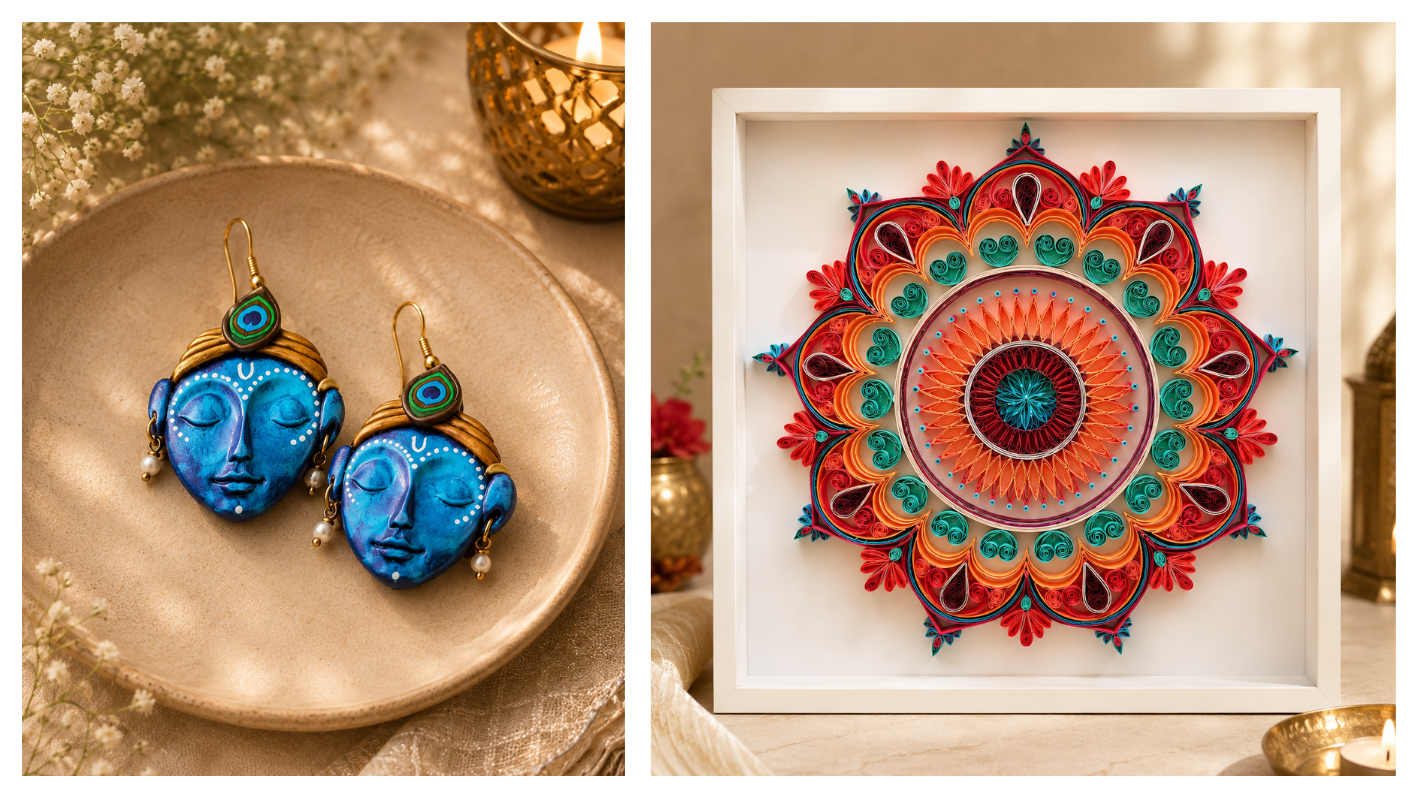
Then there is Mrudula, a mother of two who taught herself the intricate art of quilling. What began with curiosity gradually became a skill, a creative identity, and eventually a business of her own. Her story challenges the narrow identities women are often given. She could have been defined simply as a mother or homemaker. Instead, she created something that belonged entirely to her. Her hobby became a way of discovering another version of herself.
Richa's journey is different again. She spent years working demanding corporate jobs while building her creative practice alongside them. She didn't have the luxury of simply walking away from a career and becoming an artist overnight. She had to make time for her art after work, learn, experiment, build her resin practice, create content, and slowly develop an audience around it. Today, she is a self-made artist and creator in her own right. Her journey shows that the path from hobby to profession isn't always one dramatic leap. Sometimes it is hundreds of small decisions to keep making time for the thing you love until, eventually, it becomes impossible to ignore.
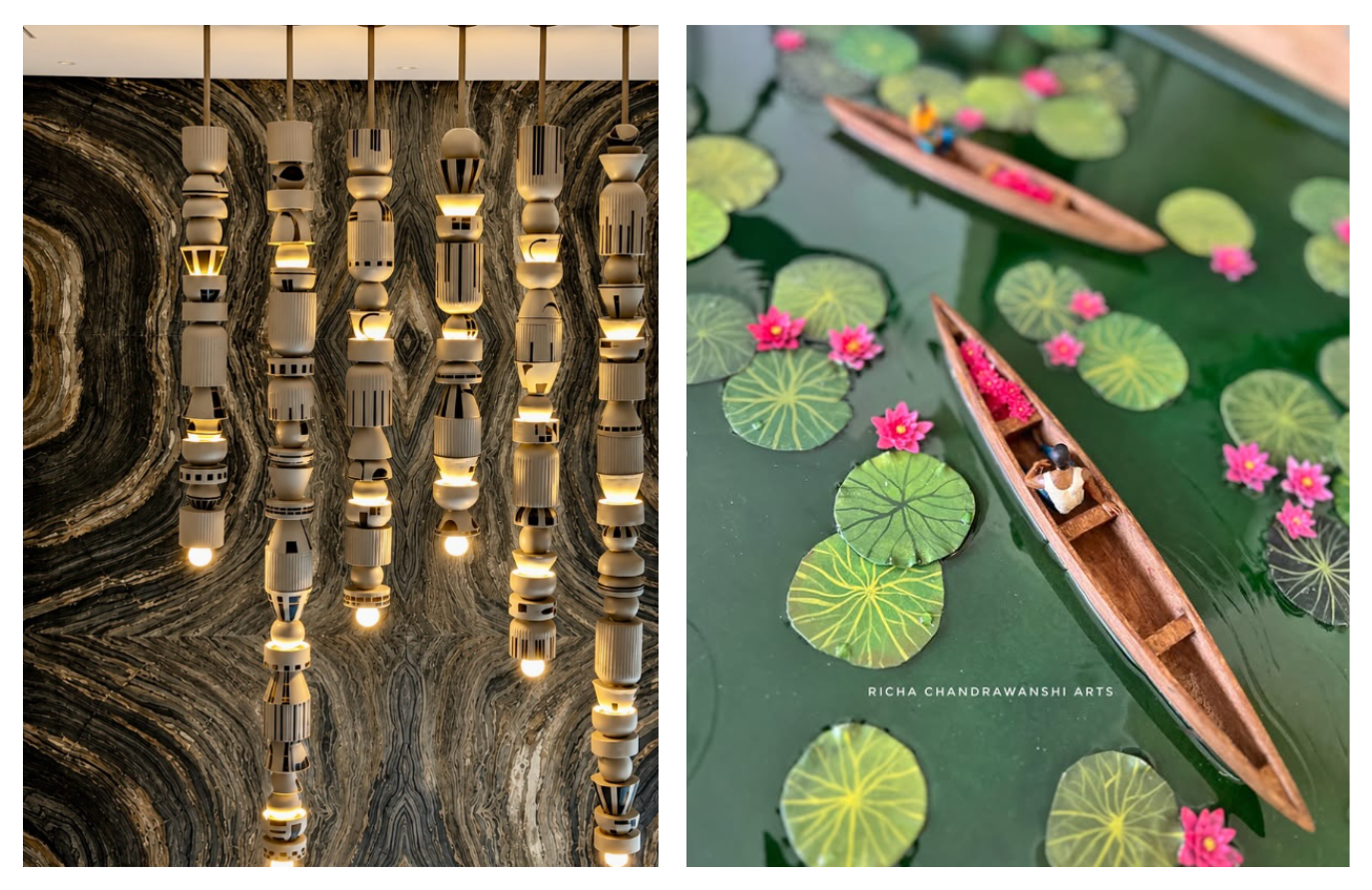
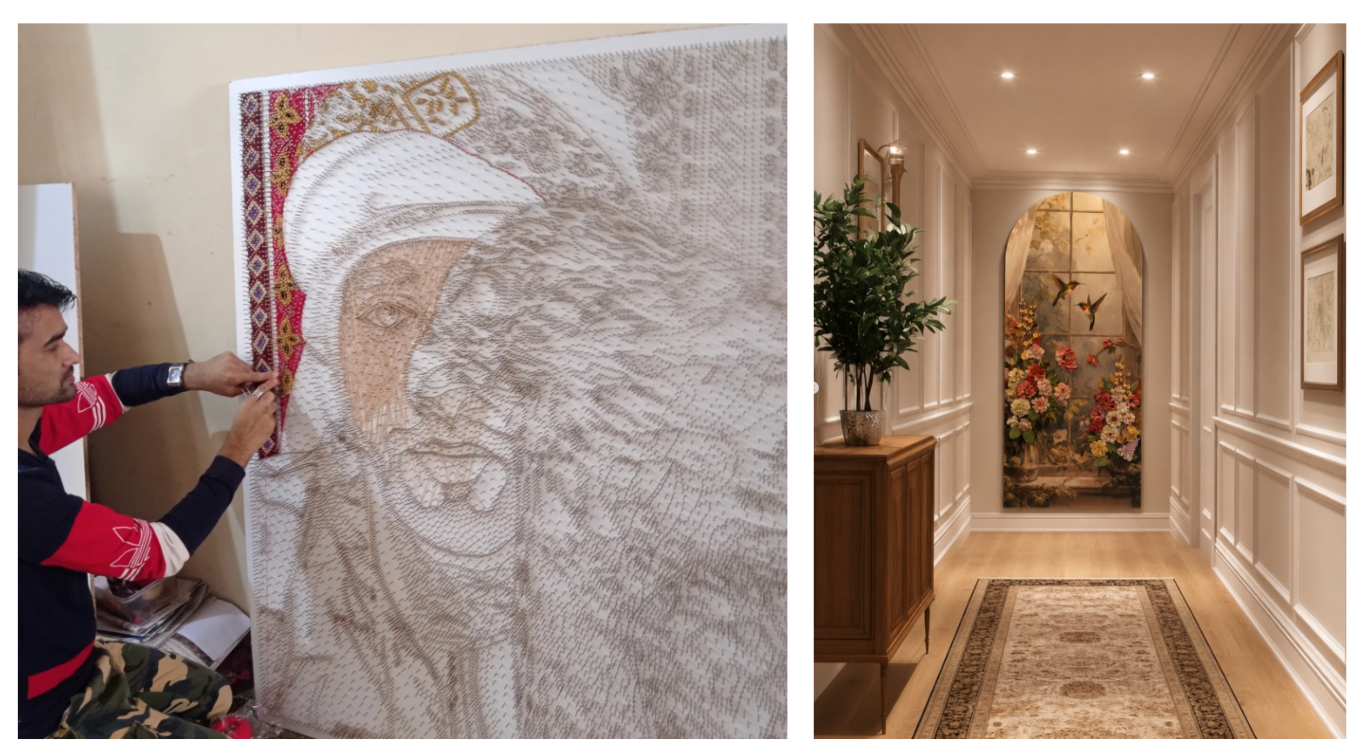
There are also the artists who remind us that a creative identity can emerge in unexpected ways. Harshita did not initially think of herself as an artist; she discovered that identity while pursuing a creative business idea and eventually built a successful creative practice alongside it. Apoorva, through Avani Studios, continuously pushes the possibilities of glass mosaic, finding new ways to innovate within a seemingly straightforward medium. Rahul transformed his passion for string art into an extraordinary practice through relentless consistency, eventually earning an India Book of Records title for creating a 3D string-art depiction of the coronation ceremony of Chhatrapati Shivaji Maharaj using 42,810 nails. Marina found her own creative language through sculpture painting, experimenting with texture, depth and dimensionality and allowing her practice to evolve through curiosity and adaptability. Each of them began somewhere different, but all four demonstrate the same truth: creativity grows when we give ourselves permission to keep exploring.
Their stories remind us of something important. No one wakes up one morning as a professional artist. People become artists by continuing to show up for the thing they love, day after day, year after year. Perhaps the problem was never the word hobby. Perhaps the problem was the way we learned to hear it.
At HobbyMela, we don't see hobbies as something small. We see them as beginnings. The beginning of confidence. The beginning of community. The beginning of healing. The beginning of purpose. And sometimes, the beginning of a career. Because not every hobby needs to become a business. Some hobbies remain beautifully personal, offering joy, balance, and a space to breathe in a busy world. But every great creative career begins in exactly the same place—with someone choosing to start.
That is why we chose the name HobbyMela. Not because we believe hobbies should stay hobbies, but because we believe every creative journey deserves to be celebrated from its very first step. We want to reclaim a word that has been made to feel small and remind people of what it truly represents.
A hobby is not a consolation prize for the career you couldn't have. It can be the first glimpse of the life you were always meant to build.
And perhaps the most important thing we learned from our artists is that there is no single timeline for that transformation. Malathy found creativity after biotechnology. Mrudula found it while raising two children. Richa built it alongside a corporate career. Harshita discovered an artistic identity through entrepreneurship. Apoorva continues to find new possibilities in glass mosaic. Rahul turned persistence into mastery. Marina trusted experimentation enough to find her own visual language.
Different lives. Different mediums. Different starting points.
But the same essential act: they kept creating.

So perhaps we need to remove one word from the sentence.
It isn't just a hobby.
It is curiosity. It is courage. It is self-expression. It is craftsmanship waiting to grow. It is a space that belongs to you. It is an idea that may one day become a calling, a business, a life's work, or simply the place where you rediscover yourself after years of putting everyone else first.
Maybe the greatest creative journeys don't begin as careers.
Maybe they begin exactly the way yours has—
as something someone once dismissed as “just a hobby.”
Follow HobbyMela on Instagram and Linkedin
Subscribe on https://www.youtube.com/@hobbymela
Read more at hobbymela.com